
High Value Home Insurance Group provides independent high-value home insurance for Indian Hill’s wooded estates, equestrian properties, and custom-built homes — placed with the carriers built for $2M+ residences.
Uncompromising coverage. Unwavering peace of mind.
Placed With Industry-Leading Carriers
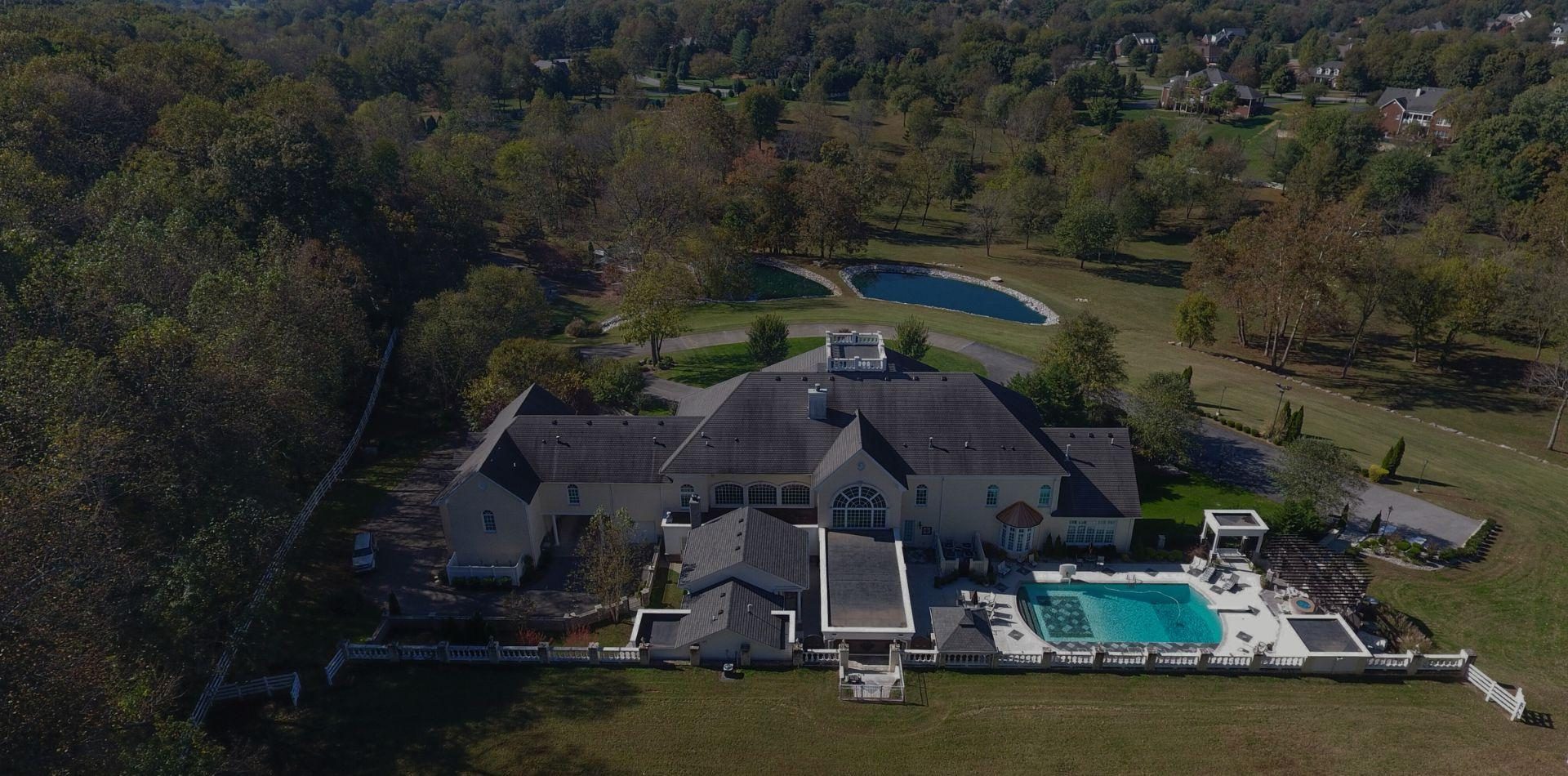
The Village of Indian Hill sits among the most valuable residential land in greater Cincinnati, where estates along Camargo Road, Given Road, Shawnee Run Road, Drake Road, and the wooded lots near Hopewell Road routinely span three to five acres or more. Minimum-acreage zoning has preserved the Village’s open, low-density character since the Camargo Realty era of the 1920s — which means the homes here are larger, more custom, and more difficult to replace than a standard appraisal or a mass-market policy assumes.
Properties of this kind carry a risk profile that a typical homeowners policy was never designed for. Custom millwork, slate and tile roofs, detached barns and carriage houses, mature tree canopy, and long private drives all change how a loss unfolds — and how much it costs to make whole. Indian Hill is also exposed to genuine Ohio Valley perils: severe summer thunderstorms with large hail and straight-line winds, the occasional tornado that tracks through southwest Ohio, and hard winter freezes that can split pipes inside an unoccupied wing of a large house.
High Value Home Insurance Group is an independent brokerage that structures coverage specifically for residences in this range. We place dwelling coverage on a true replacement-cost basis, protect valuable personal property such as art, jewelry, and collections, and pair the home policy with personal liability and umbrella limits scaled to an estate owner’s exposure.
Request a confidential review of your Indian Hill home and outbuildings — we’ll show you how an estate-grade policy is built.
Speak with a Indian Hill high-value home specialist today.
Ready to review your coverage?
A complimentary policy review takes 20 minutes and often reveals significant coverage gaps on Indian Hill homes.
The Ohio Valley sees some of the region’s most active summer convective weather. Large hail can ruin slate, tile, and cedar roofs in minutes, and straight-line winds — including the historic June 2012 derecho that drove gusts above 80 mph across southern Ohio — bring down mature trees onto roofs, fences, and vehicles. On Indian Hill’s heavily wooded lots, a single storm can produce multiple six-figure tree and structure claims at once.
Tornadoes are uncommon but real in Hamilton County. The 1974 Super Outbreak sent violent tornadoes through the Cincinnati area, and a 1999 event reached F4 intensity. A direct or near-miss tornado strike on a large, architecturally complex home is precisely the kind of catastrophic loss that estate-grade policies are designed to absorb — with extended replacement cost rather than a capped dwelling limit.
Cincinnati winters bring hard freezes, and a burst pipe in a rarely-used guest wing, pool house, or finished basement can release thousands of gallons before anyone notices. Ice dams on long, complex rooflines force meltwater under shingles and into ceilings and millwork. In a custom home, the resulting water damage to plaster, hardwood, and built-ins can dwarf the cost of the plumbing repair itself.
The Little Miami River corridor and its tributaries flood, and intense Ohio Valley rainfall produces flash flooding that does not respect FEMA map boundaries — the April 2025 flooding prompted a Hamilton County emergency declaration. A standard homeowners policy excludes flood entirely. Many estate owners need flood coverage even when their home is not in a mapped flood zone, particularly for finished lower levels and detached structures.
Indian Hill’s equestrian heritage — private barns, stables, paddocks, and the Village’s 75 miles of bridle trails — means many properties carry significant value outside the main house. Barns, run-in sheds, fencing, tack, and equipment are frequently underinsured under a basic policy. We schedule these structures and the liability that comes with horses and visitors so a barn fire or trail incident is properly covered.
Long private drives and set-back homes on multi-acre wooded lots mean longer response times for fire and emergency services and a higher chance that a small problem becomes a large one before it is discovered. Dense tree cover raises wind-fall and wildfire-adjacent debris exposure. Carriers built for estates account for this with stronger fire-protection credits, water-detection requirements, and higher base limits.
In Indian Hill, the cost to rebuild a custom home with its original materials and craftsmanship often exceeds its market price — and can far exceed an outdated insured value. We base coverage on a detailed reconstruction estimate. See why replacement cost and market value are different numbers and why the gap matters most on estate properties.
After a total loss, building-material and labor costs can spike. Estate-grade policies add extended or guaranteed replacement cost so a settlement is not capped at a dwelling limit set before a regional construction surge — the difference between rebuilding fully and rebuilding partially.
Art, antiques, jewelry, wine, and collections in Indian Hill homes are often worth more than the contents limit on a standard policy. We arrange valuable personal property coverage with agreed value and worldwide protection, so a scheduled piece is covered for what it is actually worth.
Pools, tennis courts, horses, household staff, and frequent guests all raise liability exposure. We layer high underlying limits with a personal umbrella, and help you decide how much umbrella coverage you actually need given your assets and lifestyle.
Barns, carriage houses, pool houses, and detached garages are scheduled at their own replacement values rather than folded into a token percentage of the main dwelling — the right approach for properties where the structures alone represent serious value.
As an independent brokerage, we compare the carriers that specialize in high-value homes rather than fitting your estate into a single company’s box. That keeps coverage broad and pricing competitive across renewals.
We insure estates throughout Indian Hill and the surrounding eastern-corridor communities — from the wooded lots near Camargo to the riverside homes of Terrace Park.
The following is a representative scenario illustrating how we structure coverage; it is not a specific client account.
Consider a representative Indian Hill property — not an actual client — on roughly four wooded acres off Camargo Road: a custom Georgian main house with slate roofing and extensive millwork, a detached barn converted to a studio, a pool house, and a long private drive through mature trees. The owner’s prior policy carried a dwelling limit set years earlier, treated the barn and pool house as a small percentage of the main home, and had no scheduled coverage for the family’s art and a finished lower level exposed to flash flooding.
Restructured on an estate-grade platform, the same property would carry a reconstruction-based dwelling limit with extended replacement cost, each outbuilding scheduled at its own value, scheduled valuables on an agreed-value basis, standalone flood coverage for the lower level, and an umbrella sized to the family’s assets and equestrian activity. The result is a single coordinated program in which no major structure or exposure is left to a default sub-limit.
Common Indian Hill High-Value Home Insurance Questions
Standard policies are built around typical suburban homes and cap dwelling, contents, and liability at levels that rarely fit an estate. They under-schedule outbuildings, underinsure custom construction, and exclude flood. An estate-grade policy from a high-value carrier is designed for the reconstruction cost, valuables, and liability that come with a $2M+ Indian Hill property.
Often, yes. Flash flooding from intense Ohio Valley rainfall and backwater from the Little Miami River can affect homes well outside mapped zones, and standard homeowners policies exclude flood entirely. Finished lower levels and detached structures are especially exposed. We can place flood coverage outside of a mapped flood zone as part of your program.
Rather than folding detached structures into a small percentage of the main dwelling, we schedule barns, carriage houses, pool houses, and garages at their own replacement values. For equestrian properties we also coordinate the liability that comes with horses, trails, and visitors so the entire estate — not just the main house — is properly protected.
Premium depends on reconstruction value, construction details, roof type, outbuildings, flood and liability exposure, and the protective features in place. Because we are independent, we compare estate carriers to keep pricing competitive. Here is an overview of what high value home insurance costs, and we’re glad to prepare a specific quote for your property.
Protect your Indian Hill estate. Request a complimentary, no-obligation quote for your luxury home today.
Connect with our brokers to discuss referral solutions for your high-net-worth Indian Hill clients with complex coverage needs.
Indian Hill rewards owners who treat their homes as the long-term assets they are — and insurance should be structured with the same care. An estate on several wooded acres, with custom construction, outbuildings, valuables, and real Ohio Valley weather exposure, deserves a program assembled deliberately rather than a policy bought off the shelf.
As an independent brokerage focused on high-value homes, High Value Home Insurance Group brings the right estate carriers to the table and coordinates dwelling, contents, flood, liability, and umbrella into one coherent plan. Explore our broader Ohio coverage and our full range of coverage options.
Contact us today for your complimentary, no-obligation Indian Hill high value home insurance quote. Call (234) 231-9941 or use our online quote form to begin.