
High Value Home Insurance Group: Specialized coverage for Hill Country estates in one of Texas’ fastest-growing luxury communities, where wildfire-prone canyon terrain meets flash-flood-prone creek crossings.
Uncompromising coverage. Unwavering peace of mind.
Placed With Industry-Leading Carriers
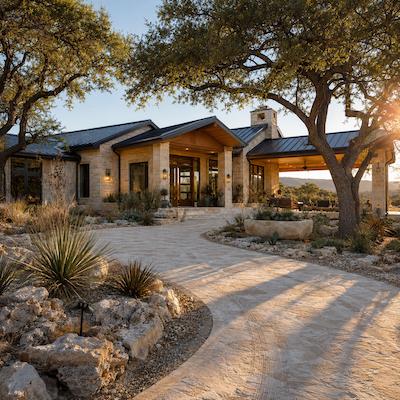
Bee Cave’s luxury housing stock is concentrated in a handful of master-planned, golf-anchored communities carved into the limestone canyons west of Austin. Spanish Oaks, Falconhead West, Serene Hills, Bella Colinas, and Homestead each pair custom estate architecture with the cedar-and-oak terrain that defines this stretch of the Hill Country, a combination that shapes how these homes need to be insured, not just what they’re worth.
The city’s risk profile is a function of its geography. West Travis County, including the land around Bee Cave, has been flagged by regional fire officials for record fuel loading: dense, unmanaged cedar and brush that raises wildland-urban interface exposure for homes built into or adjacent to canyon slopes. At the same time, the area’s creek network, including crossings along Hamilton Pool Road and Little Barton Creek near Great Divide Drive, is prone to fast-rising flash flooding after Hill Country storms, even for properties that sit outside any FEMA-mapped flood zone. Add Central Texas’s well-documented exposure to severe hail, and a Bee Cave estate is underwritten against a different set of perils than a comparable home in flatter, more suburban parts of the Austin metro. The Edwards Aquifer Authority documents the Hill Country karst terrain and drought-stage conditions that affect this Lake Travis-area community.
HVHIG structures coverage around this specific terrain: dwelling coverage set at true rebuild cost for custom Hill Country construction, flood protection for homes outside mapped flood zones, valuable articles coverage for the art, wine, and collections common in estate homes, and liability coverage sized for properties with pools, guest houses, and acreage. Every policy is built from a review of your specific lot, construction, and exposure, not a template.
In Bee Cave, the right policy is written around canyon terrain and creek exposure, not assumed from a ZIP code.
Speak with a Bee Cave high-value home specialist today.
Ready to review your coverage?
A complimentary policy review takes 20 minutes and often reveals significant coverage gaps on Bee Cave homes.
West Travis County, including the land around Bee Cave, has been cited by regional fire officials for record fuel loading: dense cedar and brush accumulation on the hilly terrain surrounding canyon-adjacent estates. Homes built into or near undeveloped Hill Country slopes carry meaningfully higher wildfire exposure than properties in cleared, flatter subdivisions.
Bee Cave’s creek network, including crossings on Hamilton Pool Road and Little Barton Creek near Great Divide Drive, is known for fast-rising flash flooding during heavy Hill Country storms. Properties near these drainages can face water exposure even when they sit outside a FEMA-designated flood zone.
Central Texas sits within one of the country’s most active hail corridors, and Bee Cave’s position west of Austin puts it squarely in the path of spring and early-summer storm systems. Impact damage to roofs, windows, and exterior cladding is one of the most common claims for Hill Country estate homes.
Bee Cave’s luxury inventory leans heavily on custom stone, stucco, and limestone-accented construction built to Hill Country architectural standards. Rebuilding these finishes after a covered loss typically costs more per square foot than standard-market construction, making accurate replacement-cost valuation essential.
The clay-heavy soils common across the Texas Hill Country expand and contract with seasonal moisture swings, placing ongoing stress on foundations and slab construction. Estate homes on larger lots with more foundation footprint can see this movement translate into plumbing and structural claims over time.
Bee Cave’s custom stone and stucco construction costs more to rebuild than standard-market homes. HVHIG sets dwelling coverage to actual reconstruction cost for Hill Country materials and craftsmanship, not the home’s market or purchase price.
Many Bee Cave estates near creek drainages sit outside FEMA flood maps yet face real flash-flood exposure. HVHIG arranges flood coverage for homes outside flood zones so a mapping technicality doesn’t leave a canyon-adjacent property uninsured.
For homes built near undeveloped Hill Country slopes with dense cedar and brush, HVHIG structures policies that account for wildland-urban interface risk, including defensible-space considerations and coverage that responds to fire-driven total losses.
Estate homes in communities like Spanish Oaks and Serene Hills often house significant art, wine, jewelry, and collectibles. Valuable personal property coverage insures these items at appraised value, separate from standard contents limits.
Properties with pools, guest quarters, and frequent entertaining carry liability exposure beyond a standard homeowners policy. HVHIG evaluates how much umbrella coverage a Bee Cave estate needs based on acreage, amenities, and household risk.
Many Bee Cave lots include detached guest houses, casitas, or larger acreage with outbuildings. Liability coverage is structured to extend across these secondary structures and the activities that come with larger Hill Country properties.
We protect high-value homes across Bee Cave and the surrounding Texas area’s most prestigious addresses.
The following is a representative scenario illustrating how we structure coverage; it is not a specific client account.
Consider a composite, illustrative example: a family purchases a custom stone estate on a canyon-adjacent lot in Falconhead West, backing to undeveloped Hill Country brush. Their prior policy, carried over from a standard homeowners carrier, priced the dwelling near the purchase price and included no specific accounting for wildfire exposure or the property’s distance from a hydrant. HVHIG rewrote the policy around actual rebuild cost for the stone and stucco construction, added coverage responsive to wildland-urban interface risk, and layered in umbrella liability sized for their pool and guest casita.
When a separate scenario involves a home near a Little Barton Creek tributary, the difference shows up during storm season: because the property sits just outside the FEMA flood map, a standard policy would exclude flood losses entirely. Structuring flood coverage alongside the primary dwelling policy closes that gap before the next Hill Country downpour, rather than after a claim is denied.
Common Bee Cave High-Value Home Insurance Questions
Much of Bee Cave sits outside FEMA-mapped flood zones, but creek crossings along Hamilton Pool Road and Little Barton Creek are known for fast-rising flash flooding during heavy storms. Homes near these drainages often benefit from flood coverage even outside a mapped zone, since standard policies exclude flood losses by default.
Standard homeowners policies generally include fire as a covered peril, but coverage limits and underwriting scrutiny increase for homes near the dense cedar and brush that define much of the wildland-urban interface around Bee Cave. HVHIG structures dwelling coverage with this exposure specifically in mind.
Cost depends on the home’s rebuild value, proximity to brush or creek terrain, and coverage selections like umbrella liability or valuable articles. Estimating high-value home insurance costs starts with a property-specific review rather than a flat citywide rate.
Protect your Bee Cave home. Request a complimentary, no-obligation quote for your luxury home today.
Connect with our dedicated brokers to discuss referral solutions for your high-net-worth Bee Cave clients with complex coverage needs.
Bee Cave’s estates deserve coverage built around how they’re actually constructed, valued, and used, not a generic homeowners policy stretched to fit. Contact High Value Home Insurance Group to structure a policy suited to your Bee Cave property.