
High Value Home Insurance Group: High-value homeowners insurance covers large-acreage equestrian estates across Harding Township, New Jersey. The township holds the Great Swamp National Wildlife Refuge and the headwaters of the Passaic River, placing many estate homes near wetlands that standard policies exclude from flood coverage. A no-obligation quote for a Harding Township estate takes minutes to request.
Uncompromising coverage. Unwavering peace of mind.
Placed With Industry-Leading Carriers
Harding Township sits differently than its Somerset Hills neighbors. Instead of framing its estates around open farmland, Harding wraps them around the Great Swamp National Wildlife Refuge, a 7,853-acre wetland preserve that lies inside the township’s own borders. The Passaic River begins here too, its headwaters starting in Harding before flowing on to supply drinking water to more than one million people downstream. That combination of protected wetland and river source gives Harding’s estate homes a water-adjacent character that Far Hills, Bernardsville, Peapack-Gladstone, and Mendham do not share in the same way.
Estate life in Harding centers on hamlets like New Vernon and Green Village, on bridle paths along Tempe Wick Road, and on the wooded acreage that borders the refuge itself. A three-to-five-acre lot standard, set by the New Vernon Neighborhood Restrictive Agreement, keeps horse barns, stables, and long private driveways spread across the landscape. Coverage for a home like this has to account for a rebuild cost far above a standard policy limit, valuable collections kept on-site, and a location close enough to wetlands and brooks that flood protection is not optional.
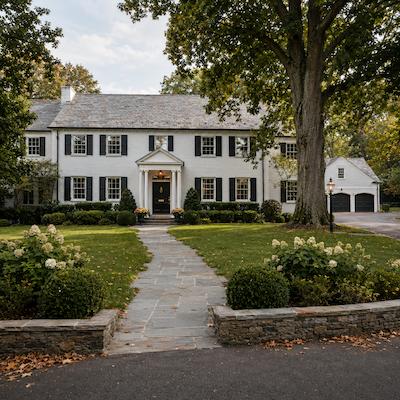
A Harding Township estate near the Great Swamp deserves coverage built around its wetlands, its acreage, and its true rebuild cost, not a generic homeowners policy.
Speak with a Harding Township high-value home specialist today.
Ready to review your coverage?
A complimentary policy review takes 20 minutes and often reveals significant coverage gaps on Harding Township homes.
Wetland-adjacent flooding is the top risk for Harding Township estates. Many properties border the Great Swamp National Wildlife Refuge or sit near the headwaters of the Passaic River, which begins in the township and supplies drinking water to more than one million people downstream, according to the New Jersey Highlands Council. Homes near Primrose Brook or Great Brook see standing water after heavy rain, especially on lower-lying land close to the refuge boundary. Standard homeowners policies exclude flood damage, so estate owners near these waterways need a separate flood insurance policy sized to the home’s full rebuild cost.
Cost for a Harding Township estate depends on rebuild cost, not the home’s sale price. Typical home sales in the township run between $1.4 million and $2.2 million, with some estates near $4 million, and rebuild costs on large custom homes often exceed the sale price once labor and materials are priced today. A three-to-five-acre lot under the New Vernon zoning standard usually carries a larger footprint, a barn or guest house, and detached structures that each need their own coverage line. Dwelling coverage set to true replacement cost, not market value, keeps the premium accurate and the payout adequate.
A standard homeowners policy will not automatically cover a horse barn or stable as a full-value structure. Harding Township’s estate lots, especially along Tempe Wick Road, Blue Mill Road, and Village Road, routinely include barns, run-in sheds, and fenced paddocks built for private equestrian use. Each detached structure needs to be scheduled individually with its own rebuilt-cost limit, and tack, saddles, and equipment kept inside qualify for valuable personal property coverage rather than standard contents limits. Liability protection also needs to extend to boarded or ridden horses on the property.
Yes, a historic Harding Township home qualifies for high-value coverage built around its age and materials. The Tempe Wick Road-Washington Corners Historic District, listed on the National Register of Historic Places, includes 44 contributing buildings such as the Tempe Wick House and the Peter Kemble House, and many surrounding estates share similar 18th- and 19th-century construction. Rebuilding hand-hewn beams, plaster walls, or period millwork costs more than modern lumber and drywall. Extended replacement cost coverage closes that gap so a covered loss does not leave the owner short at rebuild time.
A homeowner is financially responsible for tree damage a storm causes on their own wooded property. Harding’s low density, about 193 residents per square mile, the lowest in Morris County, means many estates carry mature woodland near Jockey Hollow and the Great Swamp buffer, and a downed tree can strike a barn, fence, or a neighbor’s property line. Removal, structure repair, and any injury claim from a fallen limb fall outside basic contents coverage. Liability coverage sized to the estate’s acreage and an umbrella policy on top protect against the larger claims a big, tree-covered lot can generate.
Homes bordering the Great Swamp National Wildlife Refuge or the Passaic River headwaters need flood insurance written to the estate’s real rebuild cost, not a federal minimum limit.
Homes near the Tempe Wick Road-Washington Corners Historic District need extended replacement cost coverage that accounts for period materials and custom millwork.
Tack, show equipment, art, and antiques inside a New Vernon or Green Village estate need valuable personal property coverage scheduled above standard contents limits.
A three-to-five-acre lot with a barn, stable, or riding ring needs liability coverage that reflects the added exposure of horses, staff, and visitors on the property.
Owners with household staff, boarded horses, or frequent guests need umbrella coverage that extends past a standard liability limit.
Homes on septic systems near Primrose Brook or Great Brook need water backup coverage for sewer and drain backups a flood policy will not pay for.
We protect high-value homes across Harding Township and the surrounding New Jersey area’s most prestigious addresses.
The following is a representative scenario illustrating how we structure coverage; it is not a specific client account.
Picture a family that owns a five-acre property off Village Road, backing onto the Great Swamp refuge boundary, with a converted 1800s barn used as a stable. Their existing policy covered the main house at market value and treated the barn as a minor outbuilding, with no separate flood coverage despite sitting a few hundred feet from Primrose Brook.
An HVHIG review reset the dwelling coverage to full rebuild cost, scheduled the barn and its equestrian equipment separately, and added a flood policy sized to the actual structure value instead of a federal minimum. When a spring storm pushed water across the lower pasture months later, the family filed under the right policy at the right limit instead of discovering a gap after the damage was already done.
Common Harding Township High-Value Home Insurance Questions
High-value coverage insures a home to its true rebuild cost instead of a standard policy’s lower cap. A standard homeowners policy compared with high-value coverage usually falls short on a large custom estate, a barn, or a collection of valuables kept on-site, all common on Harding’s larger lots.
Yes, a home outside a mapped flood zone can still flood, and a standard homeowners policy will not pay for that damage. Properties near the Great Swamp refuge, Primrose Brook, or Great Brook sit close enough to wetlands that a separate flood policy is worth carrying regardless of the official zone designation.
A quote request takes a few minutes to submit online or by phone. An agent then reviews the home’s square footage, acreage, outbuildings, and any equestrian use before returning a rebuild-cost-based quote, usually within one to two business days.
Yes, a horse boarding or breeding operation on a private estate can be insured, but it needs commercial or farm liability coverage layered on top of a standard homeowners policy. A boarding operation that takes in outside horses for payment falls outside personal liability limits and needs its own coverage review.
A guest house or caretaker’s cottage needs to be listed as a separate structure with its own coverage limit. Many Harding estates on three-to-five-acre lots include a second dwelling, and leaving it off the policy or underinsuring it is one of the most common gaps found during a coverage review.
The New Vernon Neighborhood Restrictive Agreement is a zoning covenant that sets minimum lot sizes of three to five acres in parts of Harding Township. It does not set insurance requirements directly, but the larger lots and detached structures it produces mean coverage needs to account for more acreage and more outbuildings than a typical suburban policy.
A home near the Jockey Hollow section of Morristown National Historical Park sits closer to dense mature woodland, which raises the chance of storm-related tree damage and downed limbs. Coverage for these homes should include liability limits sized for a large wooded lot and enough dwelling coverage to handle a major tree strike.
A claim on a historic home can take longer if the adjuster has to source period materials or specialized labor for repairs. Extended replacement cost coverage written for homes near the Tempe Wick Road-Washington Corners Historic District accounts for that added time and cost upfront, so the settlement matches what the rebuild requires.
Protect your Harding Township home. Request a complimentary, no-obligation quote for your luxury home today.
Connect with our dedicated brokers to discuss referral solutions for your high-net-worth Harding Township clients with complex coverage needs.
Harding Township’s estates deserve coverage built around how they’re actually constructed, valued, and used, not a generic homeowners policy stretched to fit. Contact High Value Home Insurance Group to structure a policy suited to your Harding Township property.