
High Value Home Insurance Group: High-value homeowners insurance protects Glen Ridge, New Jersey estates built before modern construction codes existed. Nearly 73% of the borough’s homes predate 1939, and the Glen Ridge Historic District requires original-material rebuilding that pushes reconstruction costs past standard policy limits. A no-obligation quote takes minutes.
Uncompromising coverage. Unwavering peace of mind.
Placed With Industry-Leading Carriers
Glen Ridge sits on a ridge of the Watchung Mountains in Essex County, New Jersey, where gas-lit streets and century-old homes define nearly every block. The Glen Ridge Historic District covers more than 90% of the borough, listed on the New Jersey Register of Historic Places in 1980 and the National Register of Historic Places in 1982. Homes here include design work attributed to architects Stanford White, John Russell Pope, and Frank Lloyd Wright, and local preservation rules require rebuilding to match original materials and craftsmanship after a loss.
High Value Home Insurance Group builds policies for this kind of housing stock, where a standard homeowners policy often caps payouts far below what it costs to rebuild a Queen Anne or Prairie-style home to code. Extended replacement cost coverage closes that gap, and umbrella and valuable-property protection cover the antiques, art, and landscaping that come with an estate-sized lot.
Insuring a Glen Ridge home built before 1939 takes more than a standard policy: it takes coverage matched to the real cost of rebuilding it.
Speak with a Glen Ridge high-value home specialist today.
Ready to review your coverage?
A complimentary policy review takes 20 minutes and often reveals significant coverage gaps on Glen Ridge homes.
Underinsurance from outdated policy limits threatens most Glen Ridge homeowners with pre-war houses. Nearly 73% of homes in the borough were built before 1939, and more than 90% of Glen Ridge sits inside the Glen Ridge Historic District, where the Historic Preservation Commission requires matching original materials, trim, and roofing during any rebuild. A standard policy written to square footage alone rarely covers those custom-material costs, leaving a gap of hundreds of thousands of dollars after a total loss. Extended replacement cost coverage closes that gap by paying the true cost to rebuild instead of a fixed dollar limit.
Flood coverage matters for any Glen Ridge home near Toney’s Brook or The Glen. Toney’s Brook runs through The Glen and once powered three water mills in the 19th century, and heavy regional rainfall still pushes brooks like it out of their banks along low-lying streets. Glen Ridge has participated in the National Flood Insurance Program since April 3, 1983, and the New Jersey Department of Environmental Protection requires every participating municipality to enforce flood damage prevention permits near mapped floodplains. Standard homeowners policies exclude flood damage entirely. A standalone flood insurance policy adds the protection a standard policy leaves out.
Large estate lots in Glen Ridge carry higher liability exposure than a typical suburban yard. Many homes along Ridgewood Avenue and the side streets branching from it sit on lots with mature landscaping, long driveways, and detached garages, all of which increase the chance of a guest injury or a landscaping-related accident. A jury verdict against a homeowner can exceed the limits of a standard policy in a single case. Liability coverage paired with an umbrella policy raises that protection well above the standard cap.
Antiques, art, and family heirlooms inside a Glen Ridge historic home usually exceed the personal property limits built into a standard policy. Houses in the district date to the late Victorian and Edwardian periods, and owners often hold furnishings, silver, and artwork passed down with the property or bought to match its period. Standard homeowners policies cap jewelry, art, and collectibles at a few thousand dollars combined. Valuable personal property coverage insures those items at their appraised value instead of a flat limit.
Rebuild cost, not square footage alone, determines eligibility for high-value home insurance in Glen Ridge. A carrier looks at construction quality, custom millwork, roofing material, and whether the home sits inside the Glen Ridge Historic District, since preservation rules raise the cost to restore a damaged structure. Homes with several hundred thousand dollars or more in dwelling coverage, or with detached structures, pools, or high-value contents, typically qualify for a specialty policy. Dwelling coverage sized to true rebuild cost is the starting point for that eligibility review.
A Glen Ridge home built before 1939 costs more to rebuild than its market value suggests once historic materials and craftsmanship enter the estimate. Dwelling coverage is set to that true reconstruction cost, not the purchase price.
Glen Ridge Historic District rules require original-style materials during a rebuild, and material costs shift year to year. Extended replacement cost coverage adds a cushion above the base dwelling limit to absorb that increase.
Homes near Toney’s Brook and The Glen face water exposure that a standard homeowners policy will not cover. Flood insurance is written separately and fills that gap for properties in or near the floodplain.
Older sewer and storm lines throughout Glen Ridge’s pre-war housing stock raise the odds of a backup during heavy rain. Water backup coverage pays for damage a standard policy excludes.
Period furnishings, art, and silver common in Glen Ridge’s Victorian and Edwardian homes exceed the personal property limits in a standard policy. Valuable personal property coverage insures them at appraised value.
Large lots along Ridgewood Avenue and its side streets bring more guests, more landscaping equipment, and more liability exposure. Liability coverage paired with an umbrella policy raises the protection ceiling.
We protect high-value homes across Glen Ridge and the surrounding New Jersey area’s most prestigious addresses.
The following is a representative scenario illustrating how we structure coverage; it is not a specific client account.
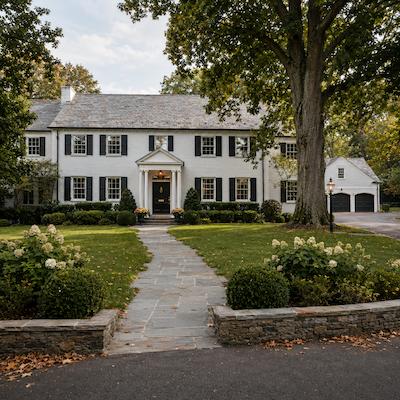
Consider a Glen Ridge homeowner on one of the tree-lined streets inside the historic district, living in a Colonial Revival built in the 1920s with original slate roofing and hand-milled trim. A standard homeowners policy, priced against the home’s market value, would leave a six-figure gap between the payout and the actual cost to restore that roofing and trim to Historic Preservation Commission standards after a fire or storm.
A high-value policy built around extended replacement cost coverage closes that gap by pricing the rebuild at what the materials and labor cost today, not at the home’s sale price. Add valuable personal property coverage for the family’s inherited art and silver, and liability coverage sized to the lot’s mature trees and long driveway, and the policy matches the property instead of a generic template.
Common Glen Ridge High-Value Home Insurance Questions
Premiums for high-value home insurance in Glen Ridge depend on rebuild cost, not market value, and typically run higher than a standard policy because dwelling limits are set closer to true reconstruction cost. A home inside the Glen Ridge Historic District with custom materials and detailed trim work will price higher than a comparable non-historic home nearby. A no-obligation quote gives an exact number for a specific property.
Flood insurance becomes mandatory for any Glen Ridge property with a federally backed mortgage that sits inside a mapped high-risk flood zone near Toney’s Brook. Homes outside the mapped zone still face flood risk during heavy regional storms, since standard homeowners policies exclude flood damage entirely regardless of zone.
A Glen Ridge Historic District home qualifies for coverage from most carriers, but a standard policy usually underinsures it. Preservation rules requiring original materials during a rebuild push reconstruction costs above what a generic dwelling limit covers, which is why high-value carriers price these homes separately.
A quote for a Glen Ridge property takes a few minutes once basic details on the home’s age, square footage, and construction are provided. Homes inside the historic district may need a follow-up question about roofing or trim materials before a final rebuild-cost figure is set.
Standard home insurance in Glen Ridge caps payouts near market value, while high-value coverage prices the policy against true rebuild cost, including custom materials and detached structures. High-value home insurance versus standard homeowners insurance breaks down the gap in more detail.
Older homes on larger Glen Ridge lots generally need higher liability limits than newer, smaller-lot construction elsewhere in Essex County. Mature trees, long driveways, and detached garages common on these properties raise the odds and the potential cost of a liability claim.
Detached structures including converted carriage houses and garages on Glen Ridge properties are insured under a separate structure endorsement added to the main dwelling policy. Rebuild cost for these structures gets calculated the same way as the main house, factoring in historic materials where applicable.
A Glen Ridge homeowner needs the home’s square footage, year built, recent renovation records, and any appraisal on valuable contents like art or antiques for an accurate high-value insurance quote. A recent photo inventory of the home’s exterior materials speeds up the underwriting review for historic district properties.
Protect your Glen Ridge home. Request a complimentary, no-obligation quote for your luxury home today.
Connect with our dedicated brokers to discuss referral solutions for your high-net-worth Glen Ridge clients with complex coverage needs.
Glen Ridge’s estates deserve coverage built around how they’re actually constructed, valued, and used, not a generic homeowners policy stretched to fit. Contact High Value Home Insurance Group to structure a policy suited to your Glen Ridge property.